
ATA Carnet Support for Manchester and UK Businesses
Practical help completing your ATA Carnet application accurately and using the document correctly throughout your temporary export journey.
Taking goods overseas temporarily for an exhibition, trade show, product demonstration, professional assignment, motorsport event or another business purpose? An ATA Carnet can simplify the customs process and help you avoid paying temporary import duties and taxes in participating countries.
However, the application must be completed accurately and the carnet must be presented and endorsed at the correct stages of the journey. Errors can cause delays, additional costs or potential claims against the financial security supporting the carnet, including movements from the UK into the European Union where the carnet system applies.
Aerona Customs Clearance is based in Manchester and helps businesses across the UK prepare the information required for an ATA Carnet application. We do not issue ATA Carnets. They are issued by authorised Chambers of Commerce. Our role is to help you complete the application correctly, understand the customs process and reduce the risk of costly mistakes.
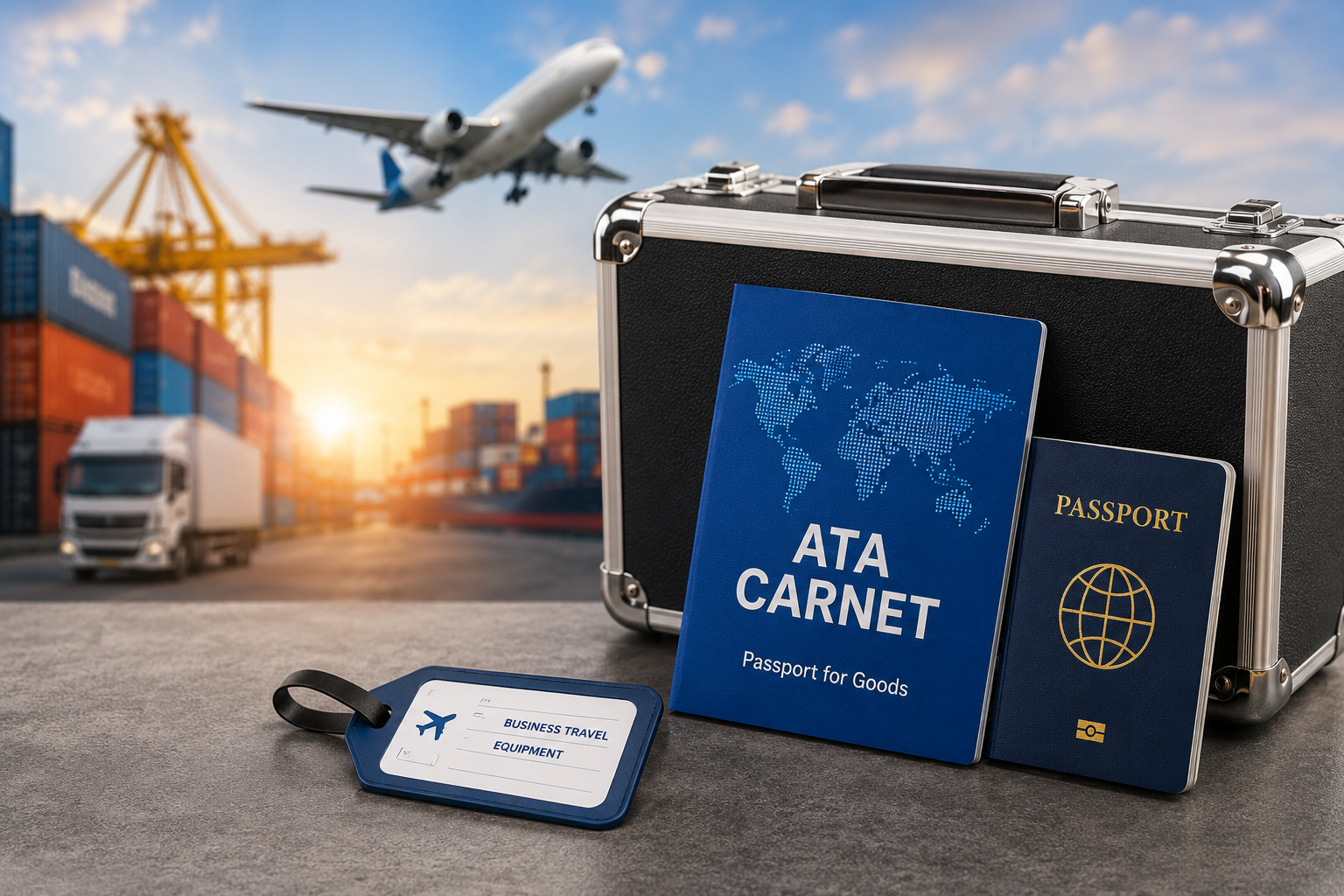
What Is an ATA Carnet UK?
An ATA Carnet is an internationally customs document for goods that are being moved temporarily between participating countries and will normally return without being sold or permanently imported.
It is often described as a passport for goods because it accompanies the items throughout their journey and is presented to customs at each relevant border movement.
A carnet can remove the need to pay temporary import duties and taxes in each participating country, provided that the conditions are followed and the goods are re-exported correctly.
Who Issues ATA Carnets in the UK?
ATA Carnets in the UK are issued by the London Chamber of Commerce and Industry and authorised Chambers of Commerce, including the Greater Manchester Chamber of Commerce. Aerona is not an issuing authority and cannot authorise a carnet.
The applicant remains responsible for supplying complete and accurate information. An issued carnet does not remove that responsibility. This is why businesses that are unfamiliar with the process often ask an experienced freight and customs agent to help prepare the application and plan how the carnet will be used.
Why Use Aerona When a Chamber Issues the Carnet?
The Chamber provides the official issuing service. Aerona provides practical, hands-on help with the information, international trade requirements and customs planning that sit behind the application.
Our support can help you:
- Decide whether an ATA Carnet is likely to be the appropriate customs procedure for your movement.
- Prepare a clear and accurate general list of the goods travelling.
- Use suitable descriptions, values, quantities, weights, serial numbers and identifying details.
- Identify missing or inconsistent information before the application is submitted.
- Understand when and where the carnet must be presented to customs.
- Plan the export, overseas import, re-export and return to the UK.
- Reduce the risk of delays, incorrect endorsements and other avoidable mistakes.
- Understand what to do if the movement changes or something goes wrong.
For a business using a carnet for the first time, or one with a long or complicated goods list, this additional support can save considerable time and reduce uncertainty.

ATA Carnet Support in Manchester
Aerona Customs Clearance is based in Manchester and supports companies throughout Greater Manchester and across the UK. We help manufacturers, exporters, exhibitors, event teams, production companies, engineers and other organisations prepare for temporary overseas movements.
Businesses searching for an ATA Carnet in Manchester may approach the Greater Manchester Chamber of Commerce as an authorised issuer. Aerona offers a complementary and vitally important service: we help you prepare the application information and understand the practical customs steps involved in using the carnet correctly.
When Might You Need an ATA Carnet?
An ATA Carnet may be suitable when goods are travelling temporarily and are expected to return to the UK without being sold or materially changed. Common uses include:
- Trade fairs, exhibitions and industry events
- Professional tools and specialist equipment
- Commercial samples and demonstration products
- Broadcasting, filming, photography and sound equipment
- Motorsport, racing and sporting events
- Artwork, jewellery, fashion and display items
- Machinery used for demonstrations or temporary assignments
- Specialist vehicles and equipment, where the carnet rules apply
A carnet is not suitable for every movement. Goods intended for sale, permanent export, processing, repair or consumption may require different customs procedures. Aerona can help you identify issues that need to be considered before you apply.
How the ATA Carnet Process Works
1. Confirm that a carnet is appropriate
The journey, destination countries, purpose of the movement and intended return of the goods should be checked before the application is prepared, particularly where goods will enter one or more countries within the European Union.
2. Prepare the general list
Every item must be described accurately. Depending on the goods, this may include quantities, weights, values, countries of origin, serial numbers, model numbers or other identifying details.
3. Apply through an authorised Chamber
The completed information is submitted through the appropriate authorised issuing body. The Chamber reviews the application, applies its issuing requirements and provides the official carnet. Aerona handles this process for you as part of our fee [Anthony to check this is accurate?]
4. Have the carnet validated before departure
The carnet must be opened and validated as required before the goods leave the UK. The correct customs endorsement is essential.
5. Present it when entering the destination country
Customs in the destination country complete the relevant import counterfoil and voucher. The carnet should remain with the goods or the person responsible for presenting them.
6. Present it again when the goods leave
The re-export section must be completed before departure from the overseas country. Missing evidence of re-export can lead to customs enquiries or charges.
7. Complete the return to the UK
The carnet is presented when the goods return so that the re-import is recorded and the movement can be properly closed.
Paper and Digital ATA Carnets
The ATA Carnet system is moving from paper documents towards a digital process. The UK, the European Union, Norway and Switzerland began accepting digital ATA Carnets from 1 June 2026, although paper and digital procedures will continue to coexist during the international transition period.
A digital carnet is held and presented through the approved ATA Carnet system and app, allowing customs officials to scan and record the relevant movement electronically rather than completing paper vouchers and counterfoils. The correct format will depend on the countries included in the journey and their readiness to process digital carnets.
Aerona can help customers understand the practical requirements before travel, including how the carnet should be presented and what the person accompanying the goods must do at each customs point.
The digital transition began on 1 June 2026 across the UK, all 27 EU member states, Norway and Switzerland. Both paper and digital processes are expected to coexist during the transition.
The General List: Where Many Mistakes Begin
The general list is a detailed inventory of the goods covered by the carnet. Customs authorities use it to identify what has entered or left a country, so vague or incomplete information can create problems.
Depending on the goods, a strong general list may need to include:
- A clear description of each item or logical group of identical items
- Make, model and serial number where available
- Quantity and unit of measurement
- Weight
- Commercial value
- Country of origin
- Other identifying marks or references
Aerona helps customers organise this information in a way that is clear, consistent and suitable for the application. We also look for gaps that could make the goods difficult to identify at customs.
Common ATA Carnet Mistakes
Problems often arise not because a business intended to do anything wrong, but because the requirements were misunderstood or a key step was missed. Common mistakes include:
- Using descriptions that are too vague for customs to identify the goods
- Omitting serial numbers or other important identifying information
- Using inaccurate values, quantities, weights or countries of origin
- Adding goods after the carnet has been issued
- Failing to have the carnet validated before leaving the UK
- Missing an import or re-export endorsement overseas
- Allowing goods listed on the carnet to be sold, left behind or disposed of without taking advice
- Assuming the carnet covers countries or types of goods that are not eligible
- Losing the carnet or separating it from the goods during the journey
- Failing to provide evidence that all goods returned or were correctly discharged
Correcting a problem after the journey has started is usually harder than preventing it before departure. Early preparation is therefore particularly important, and a large part of how we support our customers
How Aerona Supports Your Temporary Export
Before the application
We discuss the purpose of the movement, the goods, destinations and planned return. This helps identify whether a carnet appears appropriate and whether any aspect of the journey needs closer attention.
While preparing the application
We help compile and review the information required by the issuing Chamber, including the general list. The aim is to make the application complete, consistent and easier to process.
Before departure
We explain the stages at which the carnet needs to be presented and endorsed so that the person travelling with the goods understands what must happen.
During and after the journey
Where a problem arises, Aerona can help the customer understand the customs issue and the next practical steps. The earlier we are contacted, the more scope there may be to limit disruption.
ATA Carnet Guidance for Different Types of Movement
Different movements create different practical questions. Aerona can assist with carnet preparation for:
- Exhibitions and trade shows – including display equipment, stands, samples and demonstration products.
- Professional equipment – including tools, cameras, production equipment and specialist machinery needed for temporary work overseas.
- Commercial samples – including products taken abroad to show prospective customers where the goods will not be sold during the trip.
- Motorsport and events – including equipment, parts and other eligible goods travelling temporarily for races, events or demonstrations.
More detailed guidance on these types of movement can be provided separately according to your circumstances.
Common Questions About ATA Carnet UK
What Is an ATA Carnet and Do I Really Need One?
An ATA Carnet is often described as a passport for goods. It allows you to temporarily export and import goods without paying customs duties and taxes, provided the goods return to their country of origin unchanged.
You will typically need an ATA Carnet if you are:
- Attending trade fairs or exhibitions overseas.
- Taking professional equipment abroad for temporary work.
- Carrying commercial samples to show prospective buyers.
- Demonstrating products in another country.
- Transporting items such as jewellery, artwork, musical instruments, textiles, or clothing.
If your goods are leaving the UK temporarily and returning in the same condition, an ATA Carnet is usually the simplest and most cost-effective customs solution.
What Happens When I Leave the UK With an ATA Carnet?
Before leaving the UK, you must:
- Go through the red channel at the port or airport.
- Present your ATA Carnet and identification to customs.
- Ensure the carnet is completed and signed in front of a customs officer.
- Make sure your goods exactly match the items listed on the carnet.
If travelling via Dover or the Eurotunnel, you may need to visit an Inland Border Facility (IBF) where customs officers will stamp your carnet before departure.
Important: If your ATA Carnet is not stamped when leaving the UK, you may face delays, customs issues, or unexpected duty charges when returning.
What Should You Never Do With an ATA Carnet?
To avoid costly mistakes, you should never:
- Add items after the carnet has been issued.
- Include personal belongings, food, or giveaway items.
- Travel without the carnet holder or appropriate authorisation.
- Forget to obtain customs stamps at every border crossing.
Remember: If an item is not listed on the ATA Carnet, customs authorities will treat it as though it does not exist.
What Happens When I Arrive in the EU With an ATA Carnet?
When entering the EU, for example through Calais, you must:
- Follow signs for customs clearance and carnet processing.
- Present your ATA Carnet, identification, and completed import section.
- Wait for customs to stamp and validate your entry.
Failing to have your carnet stamped can result in:
- Delays leaving the EU.
- Financial claims against your carnet security.
- Complications when using future ATA Carnets.
Why Do ATA Carnets Fail?
ATA Carnets themselves do not fail; the process surrounding them does.
The most common problems occur when:
- Customs stamps are missed.
- Goods descriptions are inaccurate or incomplete.
- The carnet is lost or damaged.
- The carnet is used after its 12-month validity period.
- Restricted or undeclared goods are carried.
The biggest mistake businesses make is assuming an ATA Carnet is simply another shipping document. It is actually a controlled customs instrument that must be used correctly.
What Am I Responsible for as the ATA Carnet Holder?
As the carnet holder, you are responsible for:
- Keeping the ATA Carnet secure.
- Obtaining customs stamps at every entry and exit point.
- Ensuring goods are re-exported correctly.
- Paying any customs duties or charges if something goes wrong.
Losing an ATA Carnet overseas can become a significant financial liability.
How Do I Import Goods Into the UK Using an ATA Carnet?
If your ATA Carnet was issued outside the UK:
- Present the carnet and goods to customs on arrival.
- Complete the import section of the carnet.
- Use the red channel when entering the UK with goods.
UK customs officers will stamp and validate the carnet before the goods can be released.
This also applies when the goods arrive as freight.
How Do I Re-Export Goods From the UK Using an ATA Carnet?
When the goods leave the UK again, you must:
- Present both the goods and the carnet to customs.
- Complete the re-export section.
- Obtain a customs stamp before departure.
If shipping goods as freight, you may also need a customs declaration such as a C21 form.
No stamp means no proof of export, which could result in customs charges.
Can I Split Shipments Across Multiple Trips?
Yes. ATA Carnets can be used for partial or split shipments.
However, each movement requires:
- A separate voucher.
- Accurate record keeping.
- Clear cross-referencing of the goods being moved.
Split shipments add complexity, so professional guidance is highly recommended.
What Happens If I Do Not Bring the Goods Back?
If goods are not re-exported:
- Customs duties and taxes become payable.
- The National ATA Carnet Unit must be notified.
- A formal customs declaration may be required.
Limited exceptions may apply where exhibition goods have been:
- Consumed.
- Destroyed.
- Given away in reasonable quantities.
Supporting evidence will always be required.
Can Individuals Use ATA Carnets?
Yes. Individuals can apply for ATA Carnets, although additional financial security is usually required.
Security may be provided by:
- A refundable deposit.
- A bank guarantee.
For vehicles, additional information is required, including:
- Vehicle Identification Number (VIN).
- Engine number.
- Documentation proving the purpose of travel, such as exhibitions or motorsport events.
Not all vehicles qualify for ATA Carnet use.
How long is an ATA Carnet valid?
ATA Carnets are normally valid for 12 months.
Do I need an ATA Carnet for exhibitions?
Yes, if your goods will return to the UK after the event.
Can I add items after the carnet is issued?
No. The goods list cannot be amended after issue.
What happens if I lose my carnet abroad?
Contact customs authorities immediately and notify the issuing organisation.
Do all countries accept ATA Carnets?
No. Acceptance depends on whether the country participates in the ATA Carnet system.
Can I use a carnet for commercial samples?
Yes. Commercial samples are one of the most common uses.
Can I use an ATA Carnet for professional equipment?
Yes. Professional equipment frequently travels under ATA Carnets.
What happens if goods are sold overseas?
Duties and taxes usually become payable.
Why Choose Aerona Customs Clearance?
Aerona combines ATA Carnet application support with practical customs and freight knowledge. Our focus is not simply on completing a form. We help customers understand the whole temporary movement and prepare properly before the goods reach the border.
- Manchester-based support for businesses throughout the UK
- More than 20 years of customs clearance experience
- Hands-on help for customers unfamiliar with carnet applications
- Detailed checking of goods information before submission
- Practical guidance on export, import, re-export and return stages
- Support aimed at reducing delays, errors and avoidable costs

Speak to an ATA Carnet Specialist Today
Planning to take goods overseas temporarily? Contact Aerona before submitting your application or arranging travel. We can help you prepare the required information, understand the process and reduce the risk of mistakes.
Tell us what is travelling, where it is going, why it is moving and when it is expected to return. We will explain how we can support you and what information will be needed next.